By CRYSKULL · Published · Updated
Care for a crystal skull by removing loose dust gently, supporting the main body when moving it, and keeping it apart from other hard objects. For an intact polished surface, a clean, soft, dry cloth is a conservative starting point. Confirm the material, any treatments and the condition of the actual carving before using water or a cleaning product.
Check the carving before you clean it
Place the piece on a clear, stable work surface with a clean padded layer underneath. Look at the base, teeth, eye sockets and any projecting details. If you see a loose area, a fresh chip or a line you cannot explain, stop cleaning that area and photograph it for discussion with the supplier.
Keep the SKU with your notes so instructions can be matched to the right piece. A material name alone does not establish whether a carving has been dyed, coated, filled or repaired. The catalogue’s recorded material classification is not an independent treatment report. Our materials guide explains the collection records.
Use a gentle routine for everyday dust
- Wash and dry your hands, and clear a space before lifting the carving.
- Lift away loose dust with a clean, very soft brush, using light strokes on sound surfaces. Keep bristles away from anything loose or fragile.
- Wipe an intact polished area lightly with a clean, soft, lint-free cloth. Check the cloth for grit first, and change to a clean section as you work.
- Leave stubborn marks alone until you have a suitable cleaning method for that piece. Repeated hard rubbing can make the situation worse.
Do not scrape the teeth or eye sockets with a metal tool, and do not force a brush into a narrow recess. Keep a separate cloth for the stone rather than using one that has collected shelf dust, polish or cleaning spray.
| What you notice | First step | When to pause |
|---|---|---|
| Loose surface dust | Use a clean, very soft brush with light strokes. | Dust sits beside a loose edge or damaged detail. |
| A fingerprint or mark | Try a light wipe on a sound polished area with a clean, soft cloth. | The mark remains or needs pressure to remove. |
| Dust inside carved details | Check the recess in good light before touching it. | A tool would need to be forced into the gap. |
| A chip, loose part or unfamiliar line | Set the piece aside and take clear photographs. | Further cleaning or handling could disturb the area. |
| A shelf needs cleaning | Move the carving to a protected surface first. | The shelf is still wet or has cleaning residue. |
Confirm the method before adding water or cleaners
Do not soak a mixed collection or assume one cleaning solution suits every material. Ask whether a slightly damp cloth or another method is appropriate for the actual piece, including any treatment, coating or repair. Keep household sprays, acids, bleach, abrasive powders and polishing compounds out of the routine unless a qualified specialist has confirmed a specific method.
GIA’s Rose Quartz care guidance recommends warm, soapy water for rose quartz and advises against ultrasonic and steam cleaning. That guidance concerns the gemstone; check the condition and any additional materials in a finished carving before choosing its cleaning method.
For a shop’s mixed range, keep ultrasonic and steam equipment out of the default routine. GIA’s ultrasonic cleaning guidance explains that some materials and treatments are unsuitable. If the material or treatment is uncertain, ask for advice before using such equipment.
Support the body when moving a skull
Check the recorded weight before lifting a piece for the first time. Use dry hands and support the base and main body with both hands where practical. Carry one carving at a time over a clear route. Larger pieces may need another person or a planned handling method.
Do not use teeth, wings, a pointed feature or another projection as a handle. Lift the carving clear of the shelf instead of dragging it. When showing a customer the underside, keep the piece close to the padded work surface and turn it slowly with its weight supported.
Apply the routine to real catalogue references
These photographs show three exact, one-of-a-kind pieces. Check each piece’s status; sold carvings remain as references. They are framed separately and are not a scale comparison; use the shared dimensions and weights below when planning handling and shelf space. The images illustrate shapes to inspect, rather than a cleaning demonstration.
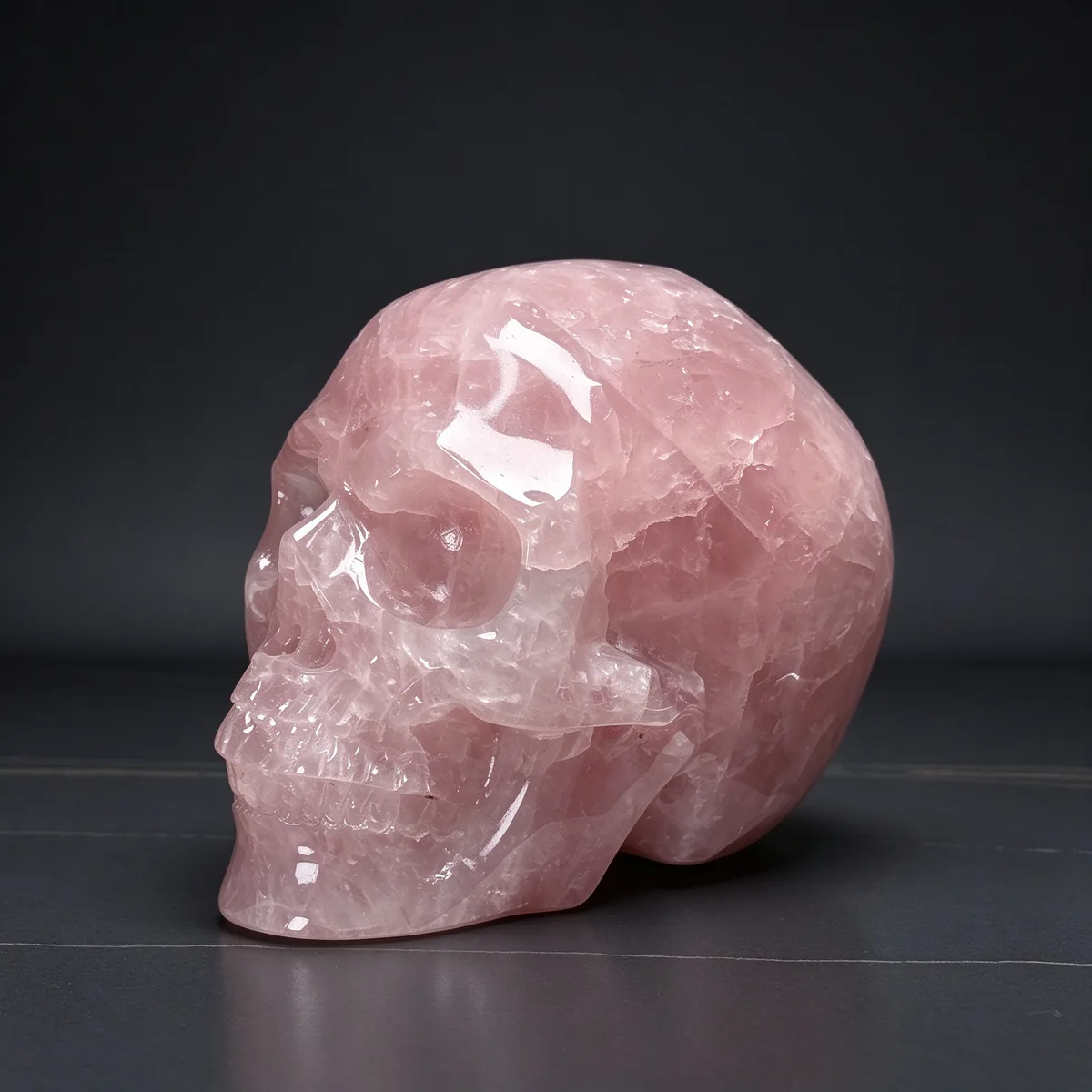
Rose Quartz: match the method to the piece
7.09″ Rose Quartz Crystal Skull
One-of-a-kind · 1 availableReview the base and carved recesses before cleaning. Ask for care instructions for the offered carving, including any treatment or repair information, rather than assuming that every pink stone needs the same routine.
CS-SK-RQT-CL-260001 · 7.09 × 4.50 × 5.54 in
9.08 lb (4,120 g)
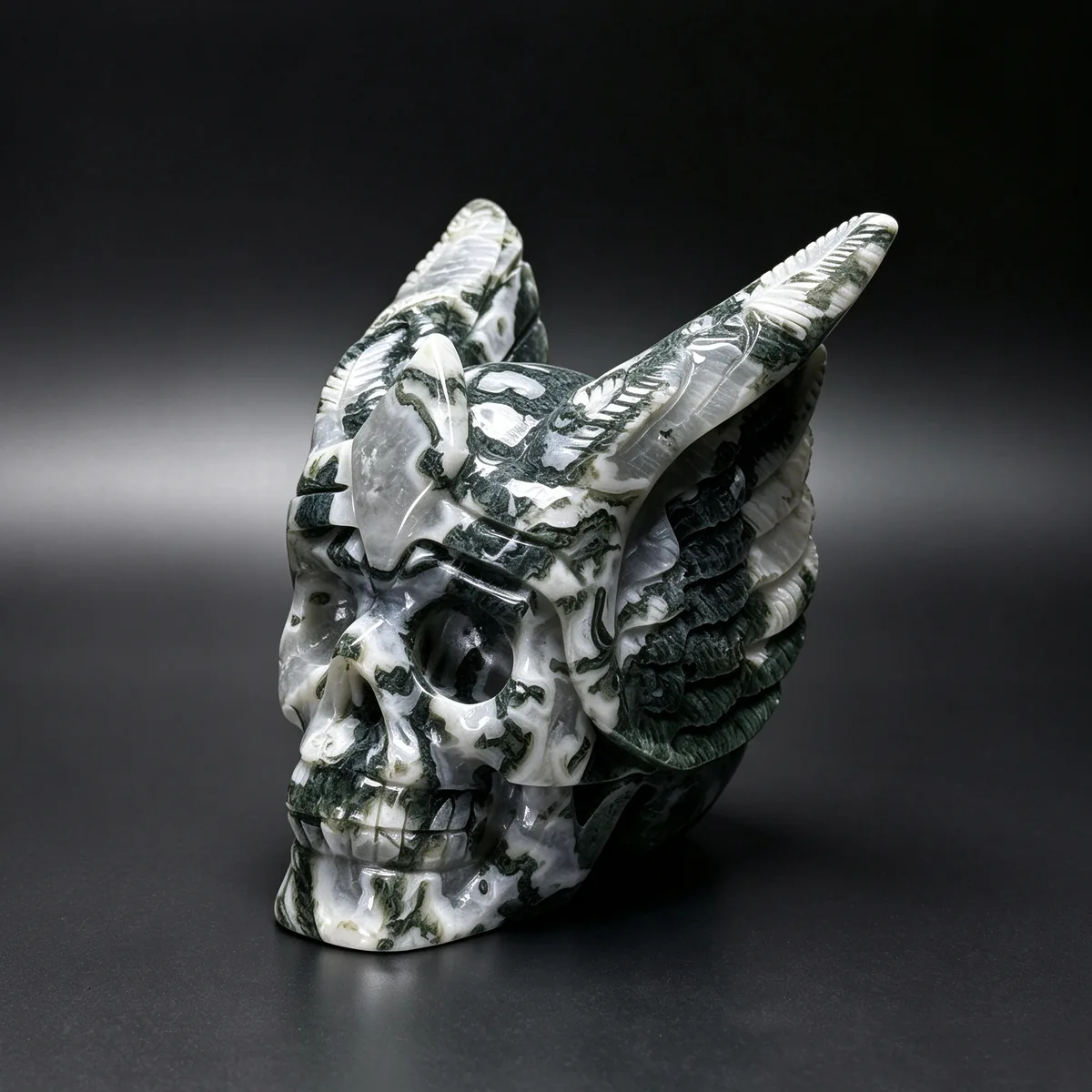
Winged Moss Agate: protect projecting details
4.30″ Winged Moss Agate Crystal Skull
One-of-a-kind · 1 availablePlan where your hands will support the main body before moving this design. Leave space around the wings on the shelf and in storage, and keep pressure off their edges.
CS-SK-MOS-WG-260001 · 4.30 × 4.18 × 4.84 in
2.92 lb (1,326 g)
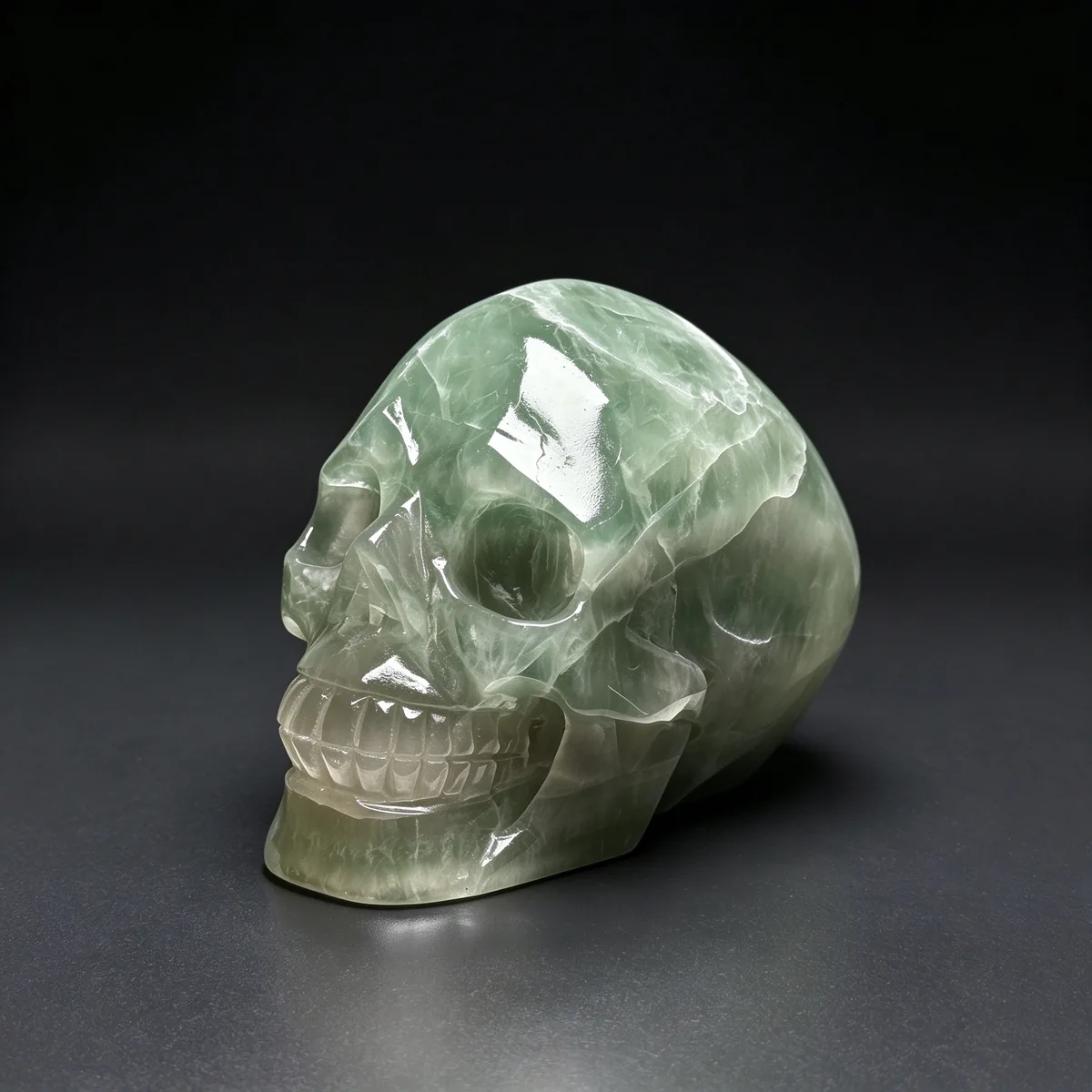
Fluorite: ask before changing the routine
One-of-a-kind · 1 availableStart by confirming the material and condition of the particular carving. If a mark does not lift with gentle dry care, request a suitable next step instead of trying stronger products or cleaning equipment.
CS-SK-FLU-CL-260017 · 4.89 × 3.15 × 3.83 in
3.37 lb (1,530 g)
Choose a stable display and separate storage
Use a level shelf with a suitable load rating for the combined pieces. Leave room to place and remove each skull without touching its neighbours, and keep the base fully supported away from the shelf edge. A soft support should sit flat and must not make the piece rock.
Keep the display away from strong heat sources and sudden temperature changes. Choose a position out of prolonged intense sunlight for a mixed collection. Clean the shelf separately and return the pieces only when the surface is dry and free of residue. GIA’s general gemstone care advice discusses heat, light, chemicals and protection from contact damage.
For storage, give each carving its own clean padded compartment or wrap, with no stone-to-stone contact. Keep pressure off projecting details and avoid stacking pieces on one another. Store the SKU and care notes with the compartment so staff can identify the piece without repeated unpacking. Our packaging checklist covers the separate checks needed when preparing pieces for transport.
Common care questions
Can I wash every crystal skull in water?
Confirm the method for each material and finished carving first. A mixed collection can include different surface conditions and treatments. Until these are clear, use gentle dry care on intact surfaces and ask about marks that remain.
Does a polished surface mean the carving cannot chip?
A glossy finish does not protect a thin edge from a knock. Support the main body, keep separate pieces from touching and pay attention to teeth, wings and other projecting details.
What should I send when asking about a mark?
Include the SKU or agreed piece identifier, a full view, close-ups from two angles and a short description of when you noticed it. Say what cleaning, if any, has already been tried. The photo and video checklist helps you request clear views.
Keep useful care notes with your selection
When choosing pieces for your shop, list available photographed SKUs, one per piece, and any display or handling limits. Keep requests for additional similar stone pieces separate and review their own dimensions and weights. Ask for material and treatment information, suitable cleaning instructions and guidance for projecting details. Add pieces above to your selection, then use the inquiry form to describe the care questions you want answered.